Almond Oil for Your Face: Benefits and How to Use
Feb 04, 2025
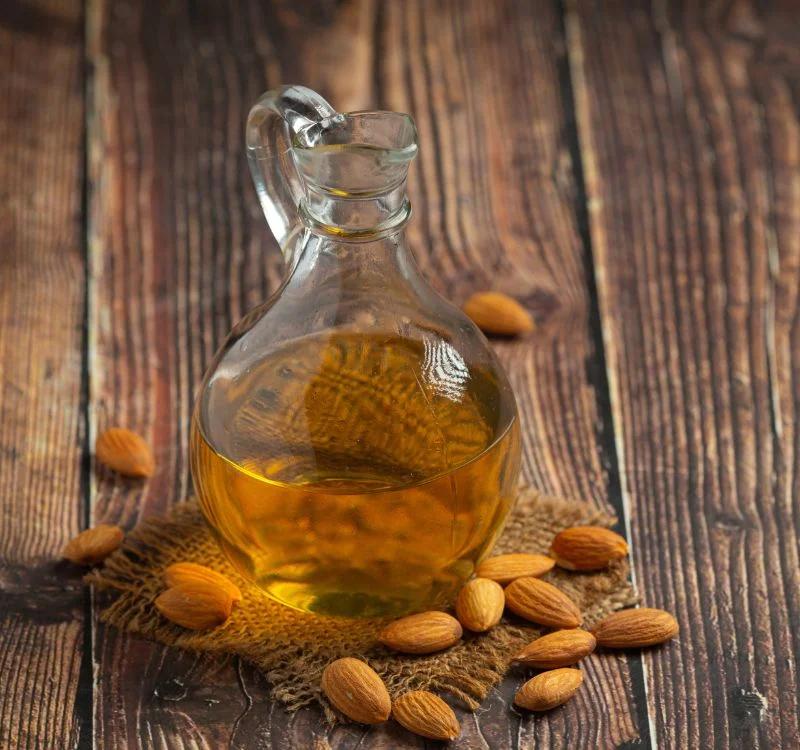
Pure almond oil, packed with the goodness of almonds, offers amazing benefits for your skin and overall wellness. Read the blog to learn why and how you can add this oil to your skincare routine.
Table of Contents:
- Concept of Agni in Ayurveda
- Ayurveda and Doshas
- The Food on which Ayurveda relies on (And why it makes sense!)
- RELATION BETWEEN GUT AND MIND
- Daily Rhythms and Gut Health
- CONCLUSION
Concept of Agni in Ayurveda
Ayurveda believes in a term known as Agni, which translates to "fire. Agni is the capacity of your body to handle and digest food.
Consider Agni to be your digestive force. It functions well when you digest your food well, absorb the nutrients, feel energetic and your mind remains clear. If it is weak and disturbed, you will feel bloated, slow, foggy and you start to develop Ama (the condition in Ayurveda refers to toxic, undigested metabolic waste formed due to weak digestive fire) over time.
Waste that is not metabolized is called Ama. This is the waste material that your body does not digest. According to ayurvedic literature it is a sticky and toxic accumulation and is the basis of almost all diseases. It obstructs passages in the body, dulls the senses and slowly paves the way for disease to develop.
There is a modern version of this story of gut science. When the lining of the gut is compromised or the gut microbiome is out of balance, undigested particles and toxins can get into the blood. That's what is called "leaky gut" or intestinal permeability. It is associated with inflammation, auto-immune disease, mood disorders and chronic disease.
Same concept. Different language but thousands of years later.
One thing Ayurveda has been correct about, and which now modern medicine is starting to understand, is that people are different. Not only with respect to the way they live or their personality, but also on a physiological level.
In ayurveda, people are classified into three basic types of constitution known as Doshas (Vata, Pitta, Kapha). Most people have a mixture of skin tones but usually one is predominant. The combination of these dosha is different in different people.
Ayurveda and Doshas
Vata types can experience inconsistent appetite, constipation, gas and bloating and may be good or bad digesters.
Under stress or over consumption in their diet of the wrong foods, Pitta types might tend to have a strong digestive fire, but can also suffer from acidity, heartburn, loose stools, and inflammation.
Kapha types will have a tendency to overeat, experience sluggish digestion, and become heavy after eating. Can eat the same food each day and yet still be able to say they are in their stomach (feeling of fullness).
It's a true-life case study of two people on the same diet and how they can end up with completely different outcomes. Personalized nutrition is an emerging field of modern medicine where a human body's microbiome, genetics and lifestyle influence its response to the food it consumes.
The Food on which Ayurveda relies on (And why it makes sense!)
These all sound somewhat strange at first, but that's what the Ayurvedic diet recommends: having the largest meal at noon, not drinking cold water during the meal and eating warm food.
It is harder for raw or cold food to digest easily than warm and cooked food. Your digestive enzymes work best if your body is warm. The cold is the opposing force to the digestive fire.
In Ayurvedic Medicine cooked vegetables are always recommended over raw salad vegetables for those with sensitive gut, and this is something many IBS sufferers find out on an experiential basis.
Spices are the real essence of ayurvedic meals and more than just a flavour for addition. In modern studies, all these have been shown to exhibit digestive qualities like ginger, cumin, coriander, fennel, turmeric and asafoetida (hing).
Ginger promotes the emptying of the stomach.
Cumin stimulates the digestive enzymes.
Turmeric is anti-inflammatory for the intestines.
Hing (asafoetida) quickly gets rid of gas and bloating.
They are not legends from the old times, but something that has been experimented and verified in a lab.
Clarified butter, also known as ghee, is a fat that has also been a traditional part of Ayurvedic medicine and is making a comeback in the wellness world. Traditionally used in its strengthening effect to gut lining and in support of Agni. Modern studies have shown that the butyrate present in ghee performs just this function nourishing cells that line the colon and keeping the gut barrier intact. Again, it's a case of two worlds coming together and arriving at the same conclusion.
Triphala is simply one of the best herbs for the gut health.
One natural ayurvedic medicine studied extensively for gut health is called Triphala, which is composed of three fruits Amalaki (Indian Gooseberry), Bibhitaki (Beheda) and Haritaki (harad).
It has been used as a mild bowel regulator, digestive tonic and digestive cleanser for centuries. Its remarkable thing is that it is not a laxative, it helps to regulate bowel movements both ways. Individuals suffering from constipation also get relief by using it. When people have diarrhea, they come to a stable state.
RELATION BETWEEN GUT AND MIND
The interconnection of gut and mind is a well-known fact and Ayurveda has mentioned it. The gut and the brain communicate all the time and when there is a gut imbalance it affects the clarity, mood and anxiety.
Gut is the 'second brain' as in the gut there are more neurons than in the spinal cord.
In Ayurveda both these two are never parted. The mind and the body had always been regarded as a single system.
It was understood that stress could have a direct impact on digestion and that poor digestion could have an impact on the mind. The word "manas" (mind) and "sharira" (body) were always used in conjunction.
The emotions of fear and anxiety were reported to get aggravated by Vata causing constipation and a nervous gut.
Anger and frustration aggravated Pitta and led to acidity, diarrhea.
Sadness and grief slowed Kapha and so does the heaviness and lack of desire to eat.
If you ever got stomach cramps prior to a big presentation, or if you lost your appetite during a difficult time, you've felt this connection before. There was something that Ayurveda could only put into words
Daily Rhythms and Gut Health.
In Ayurveda, the factor of daily routine (dinacharya) is being given a lot of attention. Some of it is very well situated in the gut.
The early rising, warm water morning drink, regular eating times and not eating before sleep all remind one of the principles of ayurveda.
Your stomach has a disruption of the gut, Microbiome can be induced by irregular eating habits (skipping meals), late eating and poor sleep quality.
The best time to eat is when the digestive fire is strongest, which is around the middle of the day, about noon, and the research confirms this – there is even a poetic reason for this – when the sun is high, metabolism and digestion is best.
CONCLUSION
Ayurveda teaches us that gut wellness is not about quick fixes but it is about balance, mindful eating, and daily habits.
The disturbance of the Mind-Gut connection can have consequences on health, as evidenced both by Ayurvedic principles and modern scientific findings.
Ayurveda offers approach to maintaining the delicate balance between the mind and body. It does by understanding the complex relationship between mental health and physical health through Ayurveda, we gain insight into a holistic approach to treatment that goes beyond merely addressing symptoms.
Ayurvedic practices, such as dietary adjustments, lifestyle changes, and mindfulness techniques, are integral tools for restoring and maintaining this balance, with the potential to prevent and treat a wide range of health conditions.